The educational materials listed on this page are about Cover Crops.
What is a cover crop? A common definition of a cover crop is a plant that is used as part of a crop rotation to improve the soil, scavenge or add nutrients, smother weeds and as a tool for erosion control. Cover crops are not harvested, but are left in place in no-till farming or turned under, especially in organic farming. Another term for cover crops is green manures, especially when the crop residue is incorporated into the soil.
Cover crops can improve soil fertility by adding organic matter, and they help in nutrient management planning by adding nitrogen to soil or by taking up nutrients in soil after cash crop harvest. Winter cover crops are most common in corn and soybean grain production systems, while spring cover crops or summer cover crops can fit many vegetable production systems. Cover crops improve soil moisture, especially over time as soil organic matter and soil tilth are improved.
Cover crop cocktails are used by many farmers as a way to improve soil health. Cocktails or cover crop mixes usually include a grass cover crop such as cereal rye or annual ryegrass, a legume cover crop like crimson clover or hairy vetch, and sometimes a brassica cover crop like forage radish, sometimes called “tillage radish.” Cover crop benefits from cocktails are often greater than seeding a single cover crop species. Cover crop mixes contribute to pest control by attracting beneficial insects and they may increase weed control by providing more ground cover and leaving more crop residue on the soil surface. Some cover crops can mitigate plant disease by suppression soil pathogens. Cover crop cocktails also attract pollinators, including native pollinators.
Cover crop seed is increasingly available from seed companies. They may also be able to help you with information about cover crop selection as well as best timing and methods of planting cover crops.
Some SARE books will help you decide how and when to grow cover crops. Managing Cover Crops Profitably, Crop Rotation on Organic Farms, and Building Soils for Better Crops are comprehensive guides or manuals. Another useful resource is the SARE topic brief Cover Crops for Sustainable Crop Rotations, which summarizes the usefulness of rotating cover crops in any cropping system. For organic farming, see the Organic Transitions business planning guide.
Showing 1-20 of 21 results
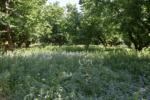
Technical Guide for Cover Cropping with Native Plants in Oregon Hazelnut Orchards
A technical guide for cover cropping with native plants in Oregon hazelnut orchards, with step-by-step instructions on how to design a proper seed mix, prepare an orchard for seeding, manage cover long-term, and additional information like seed purchasing resources and supplementary citations. The following resources have been developed by the University of Oregon in connection […]
Bridging Food Safety and Sustainability on California’s Central Coast
In this Sustainable Agriculture Action Plan funded project, the Community Environmental Council, the Central Coast Soil Hub, and the Coastal San Luis Conservation District brought together local farmers and food safety compliance consultants to discuss barriers in implementing sustainable practices while meeting food safety regulations. Fresh produce, one of the region’s primary economic drivers, is […]

Hawaii Research Examines Ecological Pest Management and Values-Driven Farming
Agricultural researchers often measure success in terms of higher yields or higher profits, but a new project in Hawaii is looking at a third dimension of success: Growers’ personal values. “A lot of farmers make the transition to organic partially for commercial reasons, but it’s also a values-driven decision,” said Ben Wiseman, a third-year PhD […]
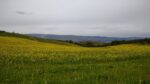
Boosting Beneficial Insects in Oregon’s Cherry Orchards
Eighty percent of Oregon’s cherries are produced in the Mid-Columbia Basin. Typically, when new orchards are planted, farmers leave the ground under the trees bare or plant grass. Farmers also regularly apply chemicals to control insect pests such as spotted wing drosophila, thrips, and leafhoppers, among others. However, planting mixed cover crops that include flowering […]
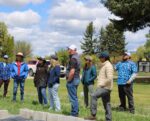
Exploring Montana Agriculture
The SARE Fellows trip to Montana was amazing. I enjoyed seeing the collaborative efforts among the various farms and organizations to share their knowledge, expertise, and resources to help each other thrive while meeting the needs of the community. This experience has shown me how people working together is what truly makes programs sustainable. – […]
Reasons to Like Wine
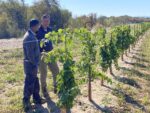
Reasons to like wine Number 462: It can be good for New Mexico’s native bees and other pollinators. Even though grapevines are largely self pollinating and don’t need insects like bees or butterflies to produce fruit, vineyards themselves can provide habitat for native pollinators and other insect species, benefiting both the grower and the environment. […]
Video: Testing Cover Crops in New Mexico Vineyards
Watch our newest video describing this Western SARE funded work - Miranda Kersten, IPM Program and Gill Giese, Viticulture of New Mexico State University describe their work promoting putting cover crops in vineyards. The research will demonstrate how to ensure the cover crops successfully grow and flower so that they attract pollinators and provide additional […]
Estimating Plant-Available Nitrogen Release from Cover Crops
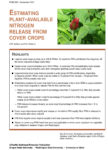
This Oregon State University fact sheet explains the basics of plant-available nitrogen (PAN); when to kill cover crops for the maximum PAN benefit; step-by-step instructions on how to perform site-specific measurements to predict PAN from your cover crop; and case studies from the Willamette Valley.
A Sunn Hemp Cover Crop for Soil Health and Nematode Management
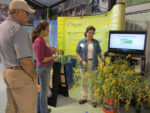
These University of Hawaii fact sheets and virtual field day explain how to use sunn hemp as a cover crop to control weeds, nematodes and other pests, add soil nutrients, prevent erosion, and contribute to a more robust and complex community of beneficial nematodes. Available fact sheets include:
Sustainable Agriculture Farming Systems Project
Public concerns regarding pesticide misuse, food safety, water use and contamination, and depletion of non-renewable resources have motivated the reevaluation of some of the practices of conventional agriculture and the exploration of alternative, more sustainable approaches to growing food. In 1988, the Sustainable Agriculture Farming Systems (SAFS) project was established at the University of California’s […]
Mixed Cover Crops
An informational video on the pros and cons of planting mixed cover crops which are often used to replace fallow. Focus is on effects of cover crops on soil quality in semi-arid regions.
Cover Crops in Organic Systems: California
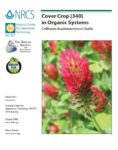
This is a collaborative project to build the capacity of conservation professionals to assist organic and transitional farmers in planning and implementing conservation practices through the Environmental Quality Incentives Program Organic Initiative. This guide is part of a series of guides created by Oregon Tilth for use by NRCS staff in the Western Region. This document provide an overview […]
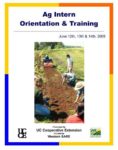
On-Farm Internship Training Binder
The Placer Ag Futures Project was conceived as a response to critical issues affecting local agricultural sustainability. This project was intended to help grow a new crop of agricultural professionals that are trained in sustainable agricultural practices. One part of the Ag Futures Project was the on-farm internship training. The summer internship program consisted of […]
Nutrient Management Plans: Idaho
This is a collaborative project to build the capacity of conservation professionals to assist organic and transitional farmers in planning and implementing conservation practices through the Environmental Quality Incentives Program Organic Initiative. This guide is part of a series of guides created by Oregon Tilth for use by NRCS staff in the Western Region. This document is […]
Nutrient Management Plans: California
This is a collaborative project to build the capacity of conservation professionals to assist organic and transitional farmers in planning and implementing conservation practices through the Environmental Quality Incentives Program Organic Initiative. This guide is part of a series of guides created by Oregon Tilth for use by NRCS staff in the Western Region. This document is an instruction […]
Nutrient Management Plans: Western Region
This document is an instruction guide for creating and implementing a nutrient management plan on certified or transitioning organic lands in the Western Region.
Cover Crops in Organic Systems: Oregon
This document provides an overview of how the USDA Natural Resources Conservation Service NRCS Cover Crop 340 conservation practice can be implemented on organic operations in Oregon.
Cover Crops in Organic Systems: Idaho
This document provides an overview of how the USDA Natural Resources Conservation Service NRCS Cover Crop 340 conservation practice can be implemented on organic operations in Idaho.
Cover Crops in Organic Systems
This document provide an overview of how the USDA Natural Resources Conservation Service NRCS Cover Crop 340 conservation practice can be implemented on organic operations in the Western Region.
Common NRCS Practices Related to Pest Management on Organic Farms
This document demonstrates how certain NRCS practices that have primary resource protection benefits can also have significant Integrated Pest Management benefits to organic producers.