Showing 1-20 of 22 results
Bridging Food Safety and Sustainability on California’s Central Coast
In this Sustainable Agriculture Action Plan funded project, the Community Environmental Council, the Central Coast Soil Hub, and the Coastal San Luis Conservation District brought together local farmers and food safety compliance consultants to discuss barriers in implementing sustainable practices while meeting food safety regulations. Fresh produce, one of the region’s primary economic drivers, is […]

Sustainable Agriculture Action Plans Funded
Western SARE funded two Sustainable Agriculture Action Plan (SAAP) grants for a total of $50,000. The funding is intended for projects leading a consultative process and creating a Sustainable Agriculture Action Plan that documents the research, regulatory, infrastructure, and educational needs and priorities required to increase sustainable agriculture practices in a specific industry/commodity or geographical […]
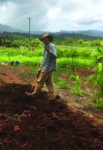
Hawaii Research Examines Ecological Pest Management and Values-Driven Farming
Agricultural researchers often measure success in terms of higher yields or higher profits, but a new project in Hawaii is looking at a third dimension of success: Growers’ personal values. “A lot of farmers make the transition to organic partially for commercial reasons, but it’s also a values-driven decision,” said Ben Wiseman, a third-year PhD […]
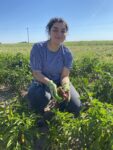
Studying the Ecology of Fear to Protect Chile in Colorado
Tiny aphids are causing outsized losses for chile pepper growers in Colorado, even though the insects don’t feed on that particular crop and don’t linger in it. Instead, aphids move through chile fields, especially after nearby alfalfa fields are cut. That wasn’t a problem until 2019 when alfalfa mosaic virus appeared in southern Colorado. Aphids […]
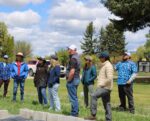
Exploring Montana Agriculture
The SARE Fellows trip to Montana was amazing. I enjoyed seeing the collaborative efforts among the various farms and organizations to share their knowledge, expertise, and resources to help each other thrive while meeting the needs of the community. This experience has shown me how people working together is what truly makes programs sustainable. – […]
Rediscovering Dry Farming
Climate change poses a serious challenge to Western farmers. How do you grow crops profitably when rainfall and drought are becoming so unpredictable and extreme? For many producers, dry farming may offer a way forward. Instead of relying on surface irrigation throughout the summer, dry farmers are finding ways to capture water from winter rains […]
Switching to Winter Crops Might Help Farmers Cope with Warming World
For people who grow food and cultivate the land, climate change isn’t something experienced though charts, graphs and predictions of foreboding futures. For growers, the threat of a warming world is immediate and increasing. “Climate change is playing out on farms like mine every day, every season and in every extreme weather event,” said Caitlin […]
Farmers Test Whether Cardboard Can Keep Bindweed at Bay
Bindweed can be the bane of farmers’ existence. The climbing vine spreads easily by seed and rigorous root system, choking off crops and other plants along the way. “Even when we till in the spring, we spend a huge amount of time hand weeding throughout the season to manage bindweed,” explained Jonah Sloven, who grows […]
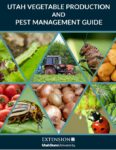
Utah Vegetable Production & Pest Management Guide
Partially funded by Western SARE, the Utah Vegetable Production and Pest Management Guide is inclusive to all growers, whether commercial or hobbyist. Although content is specific to Utah, most content applies to the Intermountain West states. The book includes twelve chapters of specific production methods and comprehensive pest and treatment recommendations for crops representing brassicas, […]
Growing Vegetables in Non-Circulating Hydroponic Beds
Growing vegetables hydroponically, such as bok choy or lettuce, can improve access to fresh produce in remote communities dependent on imported food. Additionally, the quality of locally grown produce can be higher than imported produce that can wilt during shipping. Download PDF
Photosynthesis & Hydroponics Lesson & Demonstration
Mt. Lata Farm in America Samoa created a Teachers' Resource Tool Kit with lesson plans on growing vegetables using hydroponics. This is one sample. For more information, contact the Project Leader .
Specialty Crop Production in High Tunnels
A three-year, SARE-funded project focused on developing fruit and vegetable systems suited to high tunnel production in the high-elevation arid Intermountain West. Successful systems were developed for lettuce, tomato, squash and strawberry production. Work with brambles showed that methods suited to other regions were not locally appropriate. The following Utah State University Cooperative Extension fact […]
Sustainable Agriculture Farming Systems Project
Public concerns regarding pesticide misuse, food safety, water use and contamination, and depletion of non-renewable resources have motivated the reevaluation of some of the practices of conventional agriculture and the exploration of alternative, more sustainable approaches to growing food. In 1988, the Sustainable Agriculture Farming Systems (SAFS) project was established at the University of California’s […]
Integrating Small Goat Herd Production with Fruits and Vegetable Production
Most small family farms produce and market more than a single crop from their farm. Growing multiple crops promotes benefits coming from both biologic and economic diversification. This report resulted from a project in Hawaii with the purpose to develop a diversified production system by integrating the farm’s goat production enterprise into a crop production […]
Grower Track and Trace Handbook and Videos
Circle Fresh Farms is a network of small- to medium-sized greenhouses producing certified organic fresh vegetables. In order to remain competitive and compliant with emerging expectations to provide farm-to-consumer product tracking systems, Circle Fresh needed to create a product track and trace system that was compatible with industry standards and also accessible in cost and […]
Good Agricultural Practices Program for New Mexico
The goal of the Good Agricultural Practices (GAPs) Program for New Mexico is to provide educational materials to food producers and educational professionals associated with agriculture in order to reduce microbial risks in fruits and vegetables. The project's website includes examples of on-farm forms and signs, workshop/training information, and background information and resources on GAPs.
On-Farm Internship Training Binder
The Placer Ag Futures Project was conceived as a response to critical issues affecting local agricultural sustainability. This project was intended to help grow a new crop of agricultural professionals that are trained in sustainable agricultural practices. One part of the Ag Futures Project was the on-farm internship training. The summer internship program consisted of […]
Onion Systems Management Strategies for Crop Nutrition, Weeds, Thrips, and Iris Yellow Spot Virus
Seven videos demonstrating project results and showcasing sustainable crop and pest management practices for onions were developed.
Fresh Growth Podcast
Fresh Growth: Approaches to a More Sustainable Future from Western Ag Practitioners introduces you to farmers and ranchers from around the western United States who are finding innovative sustainable practices that enrich the natural resources we all care about. These successful multi-generational operations experiment with new ideas and are making it pay. Listen in as they tell their story and provide advice for young or beginning farmers.Western SARE, funded by USDA NIFA, provides grants and education to advance innovations in sustainable agriculture. Intro music credit: Organic Energy by Kensington Studios used under license from Shutterstock. Learn more about Western SARE at western.sare.org
Helping Farmers Profit with Winter Squash
Sustainable Agriculture Fact Sheet June 2020 State: Oregon Commodity: Squash Need: Squash varieties that store well (and taste good) for winter sales Background: Winter squash is a delicious and nutritious vegetable. Pacific Northwest retail winter squash sales peak in October/November and decline through April when almost all the squash sold in Oregon is […]