The Montana Agritourism Association (MAA) hosted their successful two-day 2nd annual conference, “Opening the Gate: Unlocking Agritourism Opportunities to Connect, Collaborate, and Innovate” in November with over 160 attendees. The conference met its stated goal of bringing together farmers, ranchers, tourism partners, educators, and community leaders and in creating a space to connect, learn, and imagine what’s next for Montana agritourism.
This conference is a direct result of a Western SARE Professional Development Program grant, Montana Agritourism Fellows Program: Developing Leaders to Advance Sustainable Agritourism.”
Project leader, Montana State University Professor Shannon Arnold says, “We were excited to see all the participants attend and actively engage in the conference activities. Our hope is that each attendee left with a deeper understanding of agritourism and its potential to strengthen both the agriculture and tourism industries.”
The conference provided opportunities for everyone, regardless of where they were on their journey – for those just getting started, those who are already welcoming visitors and want to elevate the experience, and those thinking long-term sustainability.
Matt Skoglund, founder and operator of North Bridger Bison, kicked the day off with a strong message that there is “no box of agritourism,” reminding farmers and ranchers they can go big or stay small, and they make the rules.
“You figure what to do based on what you like to do, and importantly what you don’t like to do. You’re the boss.” This reminder encouraged people to not feel overwhelmed as they start planning their agribusiness operations.
Carla Leligdowicz attended hoping to get clarity on the ins and outs of starting an agritourism business.
“I was also hoping to meet people in the same place that I am in. I got both of those things and more. One major highlight was learning of the resources available to me as I navigate starting my business. I left with contacts and resources, new marketing insights, and a desire to go again next year and learn more.”
Other speakers reinforced the idea that agritourism means different ideas to different people, but the critical point to remember is that by adding agritourism to a farming operation, one is moving from a transactional model to a relationship model. Examples and ideas discussed included farm stays, workshops, farm dinners, farm stands, weddings, photo shoots, wine tasting, and more. As tourism grows in Montana, there are significant opportunities to diversify income. Having the tourism industry sit down with the agriculture industry can only increase these opportunities, according to conference organizers. And producers stated that agritourism allows them to educate the non-farming community about where their food comes from.
Farm Tours
Over 40 people attended a half day of farm tours prior to the conference to see agritourism examples for themselves. Attendees could choose from
- Amaltheia, an organic goat dairy and vegetable farm. They host tours, U-picks, and will be adding a farm stay.
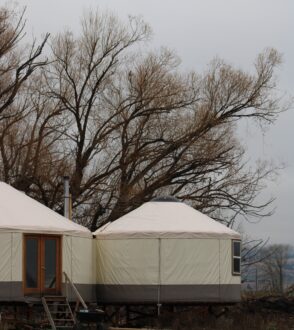
- The Wool Mill & Serentiy Sheep Farm Stay, a small-scale wool processing facility offering rustic farm stays and tours on a diversified family farm.
- Four Daughters Farm, a flower farm with a U-pick, subscription, and farm store options.
- Bodhi Farms offering hospitality, educational camps, and culinary experiences for guests and local residents.
Nate Brown, Amaltheia, focuses on “expanding to things without a lot of overhead to make it easy for everyone.” And LaVonne Stucky, Serenity Sheep Farm and Wool Mill, noted that while in the past people stayed at her farm stay because it was an easy place to stop on the way to the airport, now her customers want the experience of staying in historic cabins and sheepherder wagons on a working sheep ranch.
Western SARE’s regional coordinator Darrell Donahue says of his experience, “I really liked the variety I saw in both of my stops. At the stop I spent the most time with was really good, the host farmers (a wife and husband team) were very generous with their information and answers. They were honest about the good and the bad. On the other stop, the hosts talked about the balance between getting their work done and interacting with the “tourism” part, a good frank discussion.”
Says Arnold, “The farm tours were a vital part of the conference, giving participants the chance to see agritourism in action and connect firsthand with the farmers, practices, and stories that bring this industry to life.”
Agritourism Fellows
Arnold says that the successful conference and the MAA grew directly from her Western SARE project developing agritourism leadership. Her professional development program project trained a cohort of leaders, the Montana Agritourism Fellows, who in turn will educate farmers, ranchers, and communities about sustainable agriculture and agritourism. Fellows were agricultural operators and professionals uniquely poised to educate about sustainable agritourism, including extension and tourism professionals, economic development specialists, agricultural educators, and government officials.
The project created a community education digital repository, fact sheets, logo, educational outreach plan, the agritourism conference, and the initial formation of a statewide agritourism association. Twenty-eight people applied to be a Fellow and 12 were accepted for the two-year program.
Fellow Tana Canen, Mahlstedt Ranch, says “The highlight of being a Fellow was being part of a very diversified group who became friends. We all are the face of agritourism, yet so different in who we are, what we offer, and how we present agritourism.”
In February 2025, the MAA was officially founded with initial priority areas in education and resources, professional development, farm tours, advertising, membership, and the annual conference. An executive board consisting of Fellows members and agritourism producers was created. Tana, who joined the board after being a Fellow, states “MAA is important because now individuals and businesses who are on the ground offering agritourism can capture, direct, and lead the future of the industry and work to protect all that we hold dear.”
“The Western SARE grant made this conference possible by bringing participants together to learn, collaborate, and expand their understanding of agritourism. Its support has not only strengthened our educational efforts but also paved the way for a Montana Department of Agriculture Specialty Crop Block Grant, which will fund an Agritourism Specialist to advance the industry over the next two years,” notes Arnold.