Showing 41-60 of 123 results
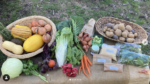
Switching to Winter Crops Might Help Farmers Cope with Warming World
For people who grow food and cultivate the land, climate change isn’t something experienced though charts, graphs and predictions of foreboding futures. For growers, the threat of a warming world is immediate and increasing. “Climate change is playing out on farms like mine every day, every season and in every extreme weather event,” said Caitlin […]
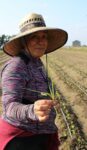
Reducing Weeds by 80% Using Solarization
La Buena Tierra farmer Maria de los Angeles Carrillo (Angeles) is delighted that her interest in researching a non-chemical pest management practice has reduced her weeds by 80%. Coquillo (nutgrass) was the exception and even that stubborn grass has been reduced greatly and grows weaker roots. Lab tests also demonstrated reduced Verticillium wilt in the […]
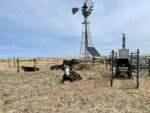
The Quest: Create Low-Emission Cattle
As cows digest grasses and other cellulose-rich plants, microbes in their large first stomach – the rumen –break down the feed, releasing the potent greenhouse gas methane as a natural fermentation byproduct. Research is ongoing into seaweed and other additives to traditional forages to reduce methane production, creating low-emission feeds. But what if you created […]
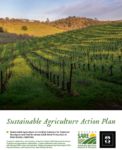
CAB Collective Sustainable Agriculture Action Plan
The Sustainable Agriculture Action Plan for Cabernet Sauvignon and red Bordeaux (CAB) Wine Production in Paso Robles is a document developed by the Paso Robles CAB Collective winegrape growers, winemakers, marketers, proprietors, and other wine industry stakeholders for under a pilot grant program by Western SARE.

Farmers Test Benefits of Using Hemp Stalks to Produce Mushrooms
When optimists are buried in proverbial lemons, they make lemonade. When the women who own Intentional Growth Farm in Utah had too many hemp stalks, they produced exceptionally large, tasty mushrooms. “We used the hemp stalks as the nutrient source for our oyster mushrooms, and customers said they were the best mushrooms they ever tasted,” […]
Heritage Grain Guidebook
From 2016 through 2021, Rocky Mountain Seed Alliance (RMSA) worked with a grassroots network of nearly 200 grain growers in varying climates, initially across the Western United States and eventually growing nationally and globally, in trialing over 250 varieties of ancient and heritage grains including Indigenous and alternative (pseudo) grains to determine varieties that can thrive in the changing climate conditions of the 21st century. Through this effort, 20 of the most adaptive and resilient varieties of cereal grains, including wheat, barley, and rye, of which there was enough seed stock, were selected for formal replicated research trials at four locations in the Mountain West. Results of both the participatory grassroots trials and the research trials, including grower and grain profiles, are documented in this manual in an effort to inform and inspire others to grow these unique varieties of grains, and to support regionalized grain networks and localized food systems.

Playing Pest Friends
At their annual meeting this summer, Western SARE state coordinators came together and played an educational board game about managing pests. Their experience was similar to other groups who indicate that they learn more by doing than listening. Jason Thomas and Grant Loomis, extension educators at the University of Idaho, received a Western SARE grant […]
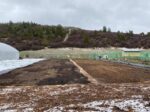
Farmers Test Whether Cardboard Can Keep Bindweed at Bay
Bindweed can be the bane of farmers’ existence. The climbing vine spreads easily by seed and rigorous root system, choking off crops and other plants along the way. “Even when we till in the spring, we spend a huge amount of time hand weeding throughout the season to manage bindweed,” explained Jonah Sloven, who grows […]
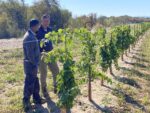
Reasons to Like Wine
Reasons to like wine Number 462: It can be good for New Mexico’s native bees and other pollinators. Even though grapevines are largely self pollinating and don’t need insects like bees or butterflies to produce fruit, vineyards themselves can provide habitat for native pollinators and other insect species, benefiting both the grower and the environment. […]
Video: Testing Cover Crops in New Mexico Vineyards
Watch our newest video describing this Western SARE funded work - Miranda Kersten, IPM Program and Gill Giese, Viticulture of New Mexico State University describe their work promoting putting cover crops in vineyards. The research will demonstrate how to ensure the cover crops successfully grow and flower so that they attract pollinators and provide additional […]

Cheatgrass-Eating Sheep
Wildfires in the West are inevitable and part of a natural, necessary ecological cycle, but invasive grasses like cheatgrass can make fires burn hotter, spread farther and cause more destruction. So, across the West, researchers, range managers, cattle ranchers and others are looking for ways to economically control cheatgrass and other invasive grasses on millions […]
Growing Mushrooms to Remediate Contaminated Soil
Mushrooms can bio-remediate certain contaminated soils, although it's not a simple or foolproof process. But for someone interested in mushrooms or already growing them, it can be work the effort.
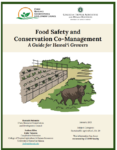
Food Safety and Conservation Co-Management: A Guide for Hawai‘i Growers
A guide for Hawaii farmers interested in improving their efforts towards food safety and improving natural resource conservation, through co-management practices. This document acts as a resource to both learn more about suitable techniques while reviewing pros and cons as shared by local producers, as well as provide template language and guidance towards implementing such […]
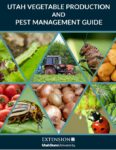
Utah Vegetable Production & Pest Management Guide
Partially funded by Western SARE, the Utah Vegetable Production and Pest Management Guide is inclusive to all growers, whether commercial or hobbyist. Although content is specific to Utah, most content applies to the Intermountain West states. The book includes twelve chapters of specific production methods and comprehensive pest and treatment recommendations for crops representing brassicas, […]
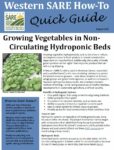
Growing Vegetables in Non-Circulating Hydroponic Beds
Growing vegetables hydroponically, such as bok choy or lettuce, can improve access to fresh produce in remote communities dependent on imported food. Additionally, the quality of locally grown produce can be higher than imported produce that can wilt during shipping. Download PDF
2018 Annual Report and Impacts
In 2018, Western SARE provided nearly $4 million in funding to projects in the region. These included Research & Education, Professional + Producer, Professional Development, Farmer/Rancher and Graduate Student grants.
2019 Annual Report and Impacts
In 2019, Western SARE provided over $5.6 million in funding to projects in the region. These included Research & Education, Professional + Producer, Professional Development, Farmer/Rancher, Research to Grassroots, and Graduate Student grants.
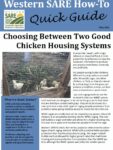
WSARE Quick Guide: Choosing Between Two Good Chicken Housing Systems
Quick guide to choosing between chicken caging systems.
WSARE Quick Guide: Preventing Soil Acidification in Montana (and Elsewhere)
Quick guide to preventing soil acidification in Montana.
WSARE Quick Guide: Welcome in Barn Owls to Provide Rodent Control
Quick guide to encouraging barn owls to provide rodent control.