Showing 1-20 of 20 results
Bridging Food Safety and Sustainability on California’s Central Coast
In this Sustainable Agriculture Action Plan funded project, the Community Environmental Council, the Central Coast Soil Hub, and the Coastal San Luis Conservation District brought together local farmers and food safety compliance consultants to discuss barriers in implementing sustainable practices while meeting food safety regulations. Fresh produce, one of the region’s primary economic drivers, is […]
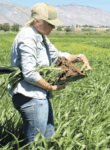
Growing Green in the Nevada Desert
When outsiders think of Nevada, they picture the garish lights of Las Vegas or perhaps red desert sands. But Nevada has a green side, too.
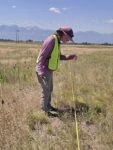
Learning How Bison Grazing Impacts Rangelands and Invasive Grasses
The 19,000-acre Bison Range on the Flathead Indian Reservation is the traditional homeland of the Confederated Salish and Kootenai Tribes. Here, the Salish, Kootenai, and Pend d’Oreilles tribes have focused on land restoration, soil health improvement, and invasive species containment in response to climate change. Invasive annual grasses, particularly Ventenata dubia, pose significant threats to […]
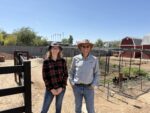
Training for the Future of Arizona’s Small-Scale Agriculture
When supply chains collapsed and grocery shelves sat empty in the first years of the COVID pandemic, many people got interested in growing their own food. Most of those didn’t have access to dozens or hundreds of acres of land. What land they could find were small urban plots, or suburban backyards, or maybe a […]
Training Ag Leaders in the Bering Strait
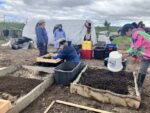
A large nonprofit with a long history in Alaska, the Rural Alaska Community Action Program (CAP) is well-known for its work addressing housing, workforce development, and health challenges. When COVID hit, the organization added food security work to their priorities. With the Coronavirus Aid, Relief, and Economic Security (CARES) Act funding, they initiated ten food […]

From Vertical Farms to Outer Space
Research projects can at times lead to unanticipated results. While working to identify an alternative and sustainable source of carbon dioxide (CO2) generation for enriching plant chambers within the growing vertical farming industry as a graduate student at the University of Arizona, Justin Chung discovered the potential benefits for sustaining astronauts in long duration missions. […]
Exploring Montana Agriculture
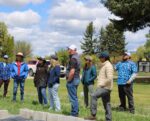
The SARE Fellows trip to Montana was amazing. I enjoyed seeing the collaborative efforts among the various farms and organizations to share their knowledge, expertise, and resources to help each other thrive while meeting the needs of the community. This experience has shown me how people working together is what truly makes programs sustainable. – […]
Building Bridges Across the Pacific
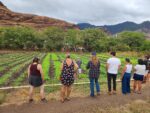
Collaboration, education, and community empowerment hold potential for driving positive change. Accordingly, Regional Food Business Centers in Hawaiian, Pacific Island, and Alaskan communities are harnessing their skills and resources to reach their shared vision of resilient, sustainable, and self-reliant local food systems. Geographic isolation, food transit logistics, large Indigenous populations, underdeveloped infrastructure, extreme climate change […]
Switching to Winter Crops Might Help Farmers Cope with Warming World
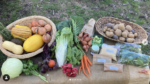
For people who grow food and cultivate the land, climate change isn’t something experienced though charts, graphs and predictions of foreboding futures. For growers, the threat of a warming world is immediate and increasing. “Climate change is playing out on farms like mine every day, every season and in every extreme weather event,” said Caitlin […]
Growing Vegetables in Non-Circulating Hydroponic Beds
Growing vegetables hydroponically, such as bok choy or lettuce, can improve access to fresh produce in remote communities dependent on imported food. Additionally, the quality of locally grown produce can be higher than imported produce that can wilt during shipping. Download PDF
Photosynthesis & Hydroponics Lesson & Demonstration
Mt. Lata Farm in America Samoa created a Teachers' Resource Tool Kit with lesson plans on growing vegetables using hydroponics. This is one sample. For more information, contact the Project Leader .

Agritourism Training Materials
Colorado State University recognized the benefits that agritourism—providing educational and recreational experiences on the farm or ranch to tourists—can provide farmers and rural communities. While agritourism helps to diversify a farmer's income, not every farmer is prepared for a service-oriented industry. With the help of a Western SARE grant, researchers developed a curriculum to help farmers […]
Nutrient Management Plans: Idaho
This is a collaborative project to build the capacity of conservation professionals to assist organic and transitional farmers in planning and implementing conservation practices through the Environmental Quality Incentives Program Organic Initiative. This guide is part of a series of guides created by Oregon Tilth for use by NRCS staff in the Western Region. This document is […]
Nutrient Management Plans: California
This is a collaborative project to build the capacity of conservation professionals to assist organic and transitional farmers in planning and implementing conservation practices through the Environmental Quality Incentives Program Organic Initiative. This guide is part of a series of guides created by Oregon Tilth for use by NRCS staff in the Western Region. This document is an instruction […]
Nutrient Management Plans: Western Region
This document is an instruction guide for creating and implementing a nutrient management plan on certified or transitioning organic lands in the Western Region.
Resources for Conservation Planning on Organic and Transitioning-to-Organic Operations
This document discusses existing tools and resources that support successful conservation planning on organic and transitioning to organic operations.
Metropolitan Foodshed Toolkit
A toolkit of strategies to support the evolution of a sustainable Portland Metropolitan Foodshed.
Fresh Growth Podcast
Fresh Growth: Approaches to a More Sustainable Future from Western Ag Practitioners introduces you to farmers and ranchers from around the western United States who are finding innovative sustainable practices that enrich the natural resources we all care about. These successful multi-generational operations experiment with new ideas and are making it pay. Listen in as they tell their story and provide advice for young or beginning farmers.Western SARE, funded by USDA NIFA, provides grants and education to advance innovations in sustainable agriculture. Intro music credit: Organic Energy by Kensington Studios used under license from Shutterstock. Learn more about Western SARE at western.sare.org
Responses to COVID-19 in Western Ag
Agriculture in the Western Region has been greatly impacted by COVID-19 and its resulting Shelter in Place orders, labor and processing challenges, and strongly shifting consumer behaviors and markets. It has also become clear that our agricultural community has been responding quickly and creatively. Western SARE cares about our community and feels a responsibility to share ideas and strategies. Toward that end, we conducted a survey of our state coordinators and project leaders of grants funded in the past three years. The data and examples are listed below. We will also create a report from this information, along with ideas provided on how Western SARE itself should adapt to the crisis.
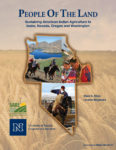
People of the Land
This Extension educator curriculum focuses on successful strategies for increasing the adoption of sustainable practices on reservation lands.