Showing 1-20 of 27 results
Bridging Food Safety and Sustainability on California’s Central Coast
In this Sustainable Agriculture Action Plan funded project, the Community Environmental Council, the Central Coast Soil Hub, and the Coastal San Luis Conservation District brought together local farmers and food safety compliance consultants to discuss barriers in implementing sustainable practices while meeting food safety regulations. Fresh produce, one of the region’s primary economic drivers, is […]
Rediscovering Dry Farming
Climate change poses a serious challenge to Western farmers. How do you grow crops profitably when rainfall and drought are becoming so unpredictable and extreme? For many producers, dry farming may offer a way forward. Instead of relying on surface irrigation throughout the summer, dry farmers are finding ways to capture water from winter rains […]
Experimenting with Kernza
While some growers and researchers are experimenting with drought-adapted varieties of existing crops, others are testing more substantial shifts in agricultural practices. One of those shifts is from annual grain crops that have to be replanted every year to perennial grains that produce a crop year after year without replanting. In eastern Wyoming, a Western […]
Growing Vegetables in Non-Circulating Hydroponic Beds
Growing vegetables hydroponically, such as bok choy or lettuce, can improve access to fresh produce in remote communities dependent on imported food. Additionally, the quality of locally grown produce can be higher than imported produce that can wilt during shipping. Download PDF
Photosynthesis & Hydroponics Lesson & Demonstration
Mt. Lata Farm in America Samoa created a Teachers' Resource Tool Kit with lesson plans on growing vegetables using hydroponics. This is one sample. For more information, contact the Project Leader .
Sustainable Agriculture Farming Systems Project
Public concerns regarding pesticide misuse, food safety, water use and contamination, and depletion of non-renewable resources have motivated the reevaluation of some of the practices of conventional agriculture and the exploration of alternative, more sustainable approaches to growing food. In 1988, the Sustainable Agriculture Farming Systems (SAFS) project was established at the University of California’s […]
Integrating Small Goat Herd Production with Fruits and Vegetable Production
Most small family farms produce and market more than a single crop from their farm. Growing multiple crops promotes benefits coming from both biologic and economic diversification. This report resulted from a project in Hawaii with the purpose to develop a diversified production system by integrating the farm’s goat production enterprise into a crop production […]
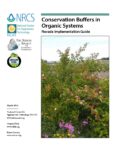
Conservation Buffers in Organic Systems: Nevada
This is a collaborative project to build the capacity of conservation professionals to assist organic and transitional farmers in planning and implementing conservation practices through the Environmental Quality Incentives Program Organic Initiative. This guide is part of a series of guides created by Oregon Tilth for use by NRCS staff in the Western Region. Conservation Buffers provides […]
Grower Track and Trace Handbook and Videos
Circle Fresh Farms is a network of small- to medium-sized greenhouses producing certified organic fresh vegetables. In order to remain competitive and compliant with emerging expectations to provide farm-to-consumer product tracking systems, Circle Fresh needed to create a product track and trace system that was compatible with industry standards and also accessible in cost and […]
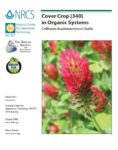
Cover Crops in Organic Systems: California
This is a collaborative project to build the capacity of conservation professionals to assist organic and transitional farmers in planning and implementing conservation practices through the Environmental Quality Incentives Program Organic Initiative. This guide is part of a series of guides created by Oregon Tilth for use by NRCS staff in the Western Region. This document provide an overview […]
Conservation Buffers in Organic Systems: Oregon
This is a collaborative project to build the capacity of conservation professionals to assist organic and transitional farmers in planning and implementing conservation practices through the Environmental Quality Incentives Program Organic Initiative. This guide is part of a series of guides created by Oregon Tilth for use by NRCS staff in the Western Region. Conservation Buffers provides […]
A Guide for Hawai’i’s Farmers
This guide was developed to assist new farmers in tropical small-island settings by providing a distillation of expert information on sustainable agriculture principles, agroecology, crop production, animal production, agroforestry and marketing.
On-Farm Internship Training Binder
The Placer Ag Futures Project was conceived as a response to critical issues affecting local agricultural sustainability. This project was intended to help grow a new crop of agricultural professionals that are trained in sustainable agricultural practices. One part of the Ag Futures Project was the on-farm internship training. The summer internship program consisted of […]
Nutrient Management Plans: Idaho
This is a collaborative project to build the capacity of conservation professionals to assist organic and transitional farmers in planning and implementing conservation practices through the Environmental Quality Incentives Program Organic Initiative. This guide is part of a series of guides created by Oregon Tilth for use by NRCS staff in the Western Region. This document is […]
Nutrient Management Plans: California
This is a collaborative project to build the capacity of conservation professionals to assist organic and transitional farmers in planning and implementing conservation practices through the Environmental Quality Incentives Program Organic Initiative. This guide is part of a series of guides created by Oregon Tilth for use by NRCS staff in the Western Region. This document is an instruction […]
Nutrient Management Plans: Western Region
This document is an instruction guide for creating and implementing a nutrient management plan on certified or transitioning organic lands in the Western Region.
Cover Crops in Organic Systems: Oregon
This document provides an overview of how the USDA Natural Resources Conservation Service NRCS Cover Crop 340 conservation practice can be implemented on organic operations in Oregon.
Cover Crops in Organic Systems: Idaho
This document provides an overview of how the USDA Natural Resources Conservation Service NRCS Cover Crop 340 conservation practice can be implemented on organic operations in Idaho.
Conservation Buffers in Organic Systems: Idaho
Conservation Buffers provides guidance on installing buffers in organic production systems to meet the USDA National Organic Program NOP regulations.
Conservation Buffers in Organic Systems: California
This is a collaborative project to build the capacity of conservation professionals to assist organic and transitional farmers in planning and implementing conservation practices through the Environmental Quality Incentives Program Organic Initiative. This guide is part of a series of guides created by Oregon Tilth for use by NRCS staff in the Western Region. Conservation Buffers provides […]